Quick Answer
Scottish baby names reflect a rich mix of Gaelic heritage, Scottish history, and cultural influences from Norse, Latin, biblical, and other naming traditions. Boys’ names such as Alasdair, Hamish, Callum, and Ruairidh and girls’ names such as Eilidh, Màiri, Catrìona, and Mòrag offer distinctive connections to Scotland. Modern favorites such as Isla and Rory also show how Scottish naming traditions continue to evolve.
Scottish baby names reflect centuries of Gaelic language, Scottish history, regional traditions, and cultural influences that have shaped naming across Scotland. From traditional Gaelic choices such as Eilidh, Màiri, and Alasdair to internationally recognized names such as Isla, Rory, and Hamish, these names offer parents a wide range of meaningful options. Some have direct roots in Scottish Gaelic or Scots, while others are connected to Scotland through historical use, regional culture, and generations of naming traditions.
Choosing a Scottish baby name involves more than finding one that sounds appealing. Its linguistic origin, documented meaning, traditional spelling, pronunciation, and cultural background all help explain its connection to Scotland. This guide explores Scottish baby names for children, including traditional Gaelic names, historical choices, and modern favorites. Discover their meanings, origins, and cultural connections to compare different naming styles and find a name whose background you can understand and confidently share.
What Makes a Name Scottish?
A name can have a Scottish connection in several different ways. Understanding these distinctions helps parents choose a name that reflects the heritage they actually want.
- Scottish Gaelic names: Names developed in or adapted into Scottish Gaelic, such as Màiri, Ruairidh, and Seumas.
- Traditional Scottish forms: Names with established Scottish usage or recognizable Scottish spellings, including Hamish and Iain.
- Scottish historical associations: Names connected with Scottish literature, historical figures, families, and regional traditions.
- Names popular in modern Scotland: Names frequently chosen by parents in Scotland, even when their linguistic origins are elsewhere.
These categories overlap, but they are not interchangeable. For example, a name can be popular in Scotland without originating in the country.
Traditional Scottish Girl Names
Scottish girl names include Gaelic forms of familiar international names alongside distinctive forms preserved through Scottish naming traditions. The following choices have identifiable linguistic connections rather than simply sounding Scottish.
1. Eilidh
Meaning: Often treated as a Scottish Gaelic form of Helen, although its development is also associated with Eilionoir.
Origin: Scottish Gaelic.
Pronunciation: AY lee.
Style: Traditional, short, and distinctive.
Why it appeals: Eilidh has a direct connection to Scottish Gaelic naming and a compact spelling. Parents should be aware that its pronunciation is not immediately obvious to every English speaking reader.
2. Màiri
Meaning: Scottish Gaelic form of Mary; its underlying meaning is disputed.
Origin: Scottish Gaelic.
Pronunciation: MAH ree.
Style: Traditional and culturally established.
Why it appeals: Màiri offers a recognizable connection to Gaelic language while preserving a spelling distinct from the English Mary. The accent is part of the traditional spelling and should not be casually removed when representing the Gaelic form.
3. Catrìona
Meaning: Scottish Gaelic form of Catherine; the original name’s etymology is debated.
Origin: Scottish Gaelic.
Pronunciation: kuh TREE nuh (approximate English rendering).
Style: Traditional and recognizable.
Why it appeals: Catrìona provides a Gaelic alternative to Catherine without losing the familiar underlying name. Its spelling also gives parents a clear connection to Scottish language traditions.
4. Mòrag
Meaning: A traditional Scottish Gaelic personal name; a definitive literal meaning should not be assumed.
Origin: Scottish Gaelic.
Pronunciation: MOH rak (approximate).
Style: Short and traditional.
Why it appeals: Mòrag is a recognizable Gaelic name rather than an English name given an artificial Scottish spelling. It is a suitable option for parents interested in less internationally familiar forms.
Traditional Scottish Boy Names
Scottish boy names preserve several Gaelic forms that correspond to familiar English names. Some have particularly interesting linguistic histories, especially when their modern spellings developed from older Gaelic forms.
1. Alasdair
Meaning: Defender of men.
Origin: Scottish Gaelic form of Alexander, ultimately derived from Greek.
Pronunciation: AL uh stair (approximate English rendering).
Style: Traditional and substantial.
Why it appeals: Alasdair retains the historical meaning associated with Alexander while using its established Gaelic form. It works for parents who want a name with both a recognizable international connection and a Scottish linguistic identity.
2. Ruairidh
Meaning: Traditionally associated with the meaning red king.
Origin: Scottish Gaelic form related to Rory.
Pronunciation: ROO ree (approximate).
Style: Distinctive and traditional.
Why it appeals: Ruairidh has a recognizable relationship with Rory but retains its Gaelic spelling. It also remains relevant in contemporary Scotland: it rose 33 places to 52nd in the 2025 boys’ rankings.
3. Seumas
Meaning: Scottish Gaelic form of James, whose inherited meaning is associated with supplanting.
Origin: Scottish Gaelic.
Pronunciation: SHAY mus (approximate).
Style: Traditional and language specific.
Why it appeals: Seumas is an established Gaelic equivalent of James rather than an unrelated name with a similar appearance. Its connection to Hamish also provides an interesting example of how Gaelic grammar influenced Scottish English names.
4. Calum
Meaning: Scottish Gaelic form of Columba.
Origin: Scottish Gaelic, with a Latin and historical religious connection through Columba.
Pronunciation: KAL um (approximate English rendering).
Style: Familiar, concise, and traditional.
Why it appeals: Calum offers a straightforward spelling and a well established Gaelic identity. It is also connected to the historical name Columba, making it interesting to parents exploring Scottish linguistic and religious history.
Scottish Names With Historical and Cultural Connections
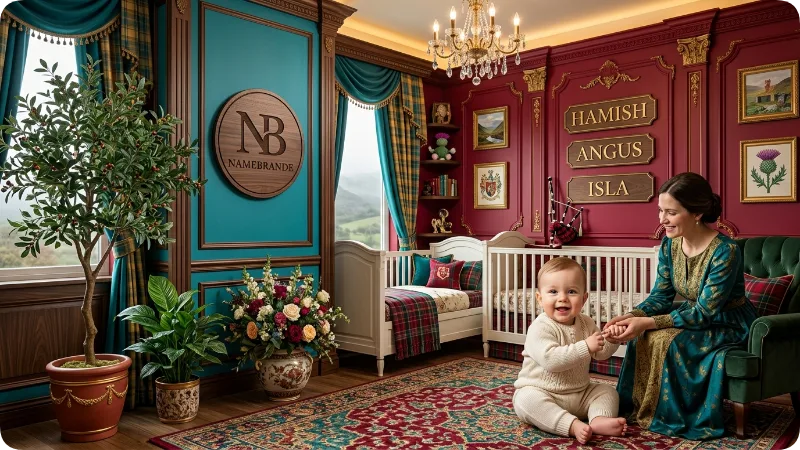
Some Scottish names are especially interesting because their modern forms preserve older language patterns or historical usage. These examples show why Scottish naming traditions cannot be reduced to a collection of names that simply sound Celtic.
1. Hamish
Meaning: Carries the inherited meaning associated with James.
Origin: Anglicized form of the Gaelic vocative a Sheumais, derived from Seumas.
Pronunciation: HAY mish.
Style: Traditional Scottish English.
Why it appeals: Hamish has a particularly clear linguistic connection to Scottish Gaelic. The Dictionary of the Scots Language records its relationship with Seumas and notes its appearance in Scottish literary history in Walter Scott’s Rob Roy (1817).
2. Angus
Meaning: Traditionally interpreted as one choice or exceptional one, although the precise historical interpretation should be treated carefully.
Origin: Scottish Gaelic Aonghas, with older Gaelic and Irish linguistic roots.
Pronunciation: ANG gus.
Style: Traditional and internationally recognizable.
Why it appeals: Angus has a long standing association with Scottish naming and is recognizable outside Scotland. Its Gaelic counterpart, Aonghas, provides a more language specific option for parents who want to retain the original form.
3. Isla
Meaning: Usually connected with the Scottish island of Islay as a place name association; a literal personal name meaning is not firmly established.
Origin: Scottish geographical association.
Pronunciation: EYE luh.
Style: Contemporary and concise.
Why it appeals: Isla offers a clear geographical connection to Scotland while remaining easy to use in English speaking countries. It ranked second among girls’ names in Scotland in 2025, with 253 registrations.
Scottish Baby Names Popular in Modern Scotland
Scottish naming preferences combine traditional choices with names shared across many English speaking countries. Official birth registration figures provide a more reliable picture of current usage than informal lists describing names as popular.
The National Records of Scotland published its 2025 baby name statistics on May 26, 2026. Freya became the leading girls’ name, while Noah retained the leading position for boys.
| Girls’ names | 2025 position | Boys’ names | 2025 position |
|---|---|---|---|
| Freya | 1 | Noah | 1 |
| Isla | 2 | Luca | 2 |
| Olivia | 3 | Rory | 3 |
| Amelia | 4 | Muhammad | 4 |
| Grace | 5 | Oliver | 5 |
| Emily | 6 | Theo | 6 |
| Millie | 7 | Leo | 7 |
| Lily | 8 | Archie | 8 |
| Sophia | 9 | Finlay | 9 |
| Rosie | 10 | Harris | 10 |
These rankings describe births registered in Scotland during 2025, not the popularity of Scottish origin names among American parents.
How to Choose a Scottish Baby Name
Before settling on a name, consider the practical details as well as its cultural background.
- Does the name have a genuine Scottish connection? Decide if you prefer a Gaelic language name, a historical Scottish form, or simply a name popular in Scotland.
- Can family and friends pronounce it? Names such as Eilidh and Ruairidh may need pronunciation guidance in the United States.
- Will you preserve the original spelling? Gaelic accents and letter combinations can distinguish one traditional form from another.
- Does the meaning have reliable support? Avoid choosing a name based on an attractive but unverified online translation.
- Does it work with your surname? Say the complete name aloud and consider its spelling, rhythm, and initials.
A Shortlist of Scottish Baby Names Worth Considering
These eight names provide a balanced starting point, covering both traditional Gaelic choices and names with wider modern recognition.
| Name | Gender association | Why consider it |
|---|---|---|
| Eilidh | Girl | Established Gaelic connection and distinctive spelling |
| Màiri | Girl | Traditional Gaelic form of Mary |
| Catrìona | Girl | Gaelic form of Catherine |
| Isla | Girl | Scottish geographical association and documented modern popularity |
| Alasdair | Boy | Gaelic form of Alexander with an established historical meaning |
| Ruairidh | Boy | Traditional Gaelic form related to Rory |
| Hamish | Boy | Distinctive Scottish linguistic development from Seumas |
| Calum | Boy | Established Gaelic form with a historical connection to Columba |
For American parents, Isla and Hamish may be easier to introduce into everyday English language settings. Eilidh, Màiri, and Ruairidh offer more visibly Gaelic spellings and may require occasional pronunciation explanations.
Common Mistakes to Avoid When Choosing Scottish Baby Names
Choosing a Scottish baby name requires more than finding a name that sounds attractive. Parents should understand its actual linguistic roots, traditional spelling, and cultural background before making a decision.
- Confusing Scottish and Scottish Gaelic names: Not every name used in Scotland originated in Gaelic. Scottish naming traditions also include Scots, English, Norse, and other influences.
- Relying on incorrect meanings: Online name lists sometimes attach attractive meanings without reliable historical or linguistic evidence. Check the name’s documented etymology before accepting a translation.
- Ignoring traditional pronunciation: Names such as Eilidh and Ruairidh may be unfamiliar to American readers. Learning their established pronunciations can prevent confusion.
- Changing traditional spellings unnecessarily: Gaelic spellings and accents are meaningful parts of the language. Consider preserving the original form rather than altering it simply to make the name look more familiar.
- Treating popularity as Scottish origin: A name can rank highly in Scotland without having Scottish linguistic roots. Check its origin separately from its popularity.
FAQs
What are traditional Scottish baby names?
Traditional choices include Eilidh, Màiri, Alasdair, Seumas, Calum, and Hamish. Several have direct connections to Scottish Gaelic language and naming traditions.
What are popular Scottish girl names?
In Scotland’s 2025 official rankings, Freya was first, followed by Isla and Olivia. Eilidh and Màiri are additional choices for parents interested in Gaelic traditions.
What are popular Scottish boy names?
Noah ranked first in Scotland in 2025, followed by Luca and Rory. Traditional Gaelic options include Alasdair, Ruairidh, Seumas, and Calum.
Are Scottish and Scottish Gaelic names the same?
No. Scottish names can come from Gaelic, Scots, English, Norse, and other linguistic traditions. Scottish Gaelic names are specifically connected to the Gaelic language.
Are Scottish baby names suitable for American families?
Yes. Many are usable in the United States, although names with Gaelic spellings may require pronunciation guidance. Parents can choose between familiar forms such as Isla and Angus or more language specific options such as Eilidh and Ruairidh.
Final Thought
Scottish baby names bring together rich Gaelic traditions, historical influences, and names recognized across modern Scotland. From the distinctive Gaelic roots of Eilidh and Màiri to the historical development of Hamish and the wider recognition of Isla and Alasdair, each name offers a different connection to Scottish heritage.
Choosing the right name means looking beyond its sound or popularity. Consider its documented origin, traditional spelling, pronunciation, and cultural background before making a decision. This helps parents find a meaningful name that works in everyday life while reflecting a genuine connection to Scotland.

Brian Cox is a names editor and naming researcher at NameBrande.com who believes choosing a name starts with understanding its meaning, sound, and character. He focuses on boy names, naming styles, origins, and practical name ideas, turning research into clear, useful guides.
Areas of Focus: Boy Names | Name Meanings | Name Origins | Naming Styles | Name Ideas | Naming Research