
Quick Answer
Hawaiian baby names draw on the language, natural world, and cultural traditions of Hawaiʻi. Names such as Kai (sea), Mahina (moon), Makani (wind), and Leilani (heavenly lei) reflect the meanings found in Hawaiian words. This guide explores Hawaiian girl names, boy names, unisex choices, nature inspired names, and Hawaiian forms of biblical names, with meanings, pronunciation, and cultural context.
Hawaiian baby names are closely connected to the Hawaiian language, the natural environment of Hawaiʻi, family heritage, and the history of the islands.
Many names come from Hawaiian words for the sea, sky, flowers, wind, moon, love, and other aspects of life. For example, Kailani combines kai (“sea”) and lani (“sky” or “heaven”), while Leilani combines lei with lani. Understanding these individual words can help explain the meanings of Hawaiian names more accurately.
Hawaiian naming also reflects both Indigenous traditions and later cultural influences. Some names come directly from Hawaiian vocabulary, while others are Hawaiian forms of names introduced through Christianity, such as Malia, the Hawaiian form of Mary, and Elikapeka, the Hawaiian form of Elizabeth. These borrowed forms should not be confused with names that originated as Hawaiian words.
This guide explores Hawaiian girl names, boy names, unisex names, nature inspired choices, traditional names, and Hawaiian forms of biblical names, with meanings, pronunciation, and cultural context to help you compare names more thoughtfully.
Hawaiian Baby Names at a Glance
The following selection focuses on names with documented Hawaiian language roots or established Hawaiian usage rather than names that merely sound tropical or are marketed as “Hawaiian inspired.”
Nature Inspired Hawaiian Baby Names
| Name | Meaning | Gender / Usage | Hawaiian Context |
|---|---|---|---|
| Kai | Sea, seawater | Unisex | Hawaiian word and established given name |
| Kailani | Sea and sky | Girl | kai + lani |
| Mahina | Moon; moonlight | Girl | Hawaiian word |
| Maile | Maile vine | Girl | Fragrant Hawaiian plant used in lei |
| Melia | Plumeria | Girl | Hawaiian plant name |
| Makani | Wind, breeze | Unisex | Hawaiian word |
| Moana | Ocean, open sea | Unisex | Hawaiian word |
| Koa | Brave, bold, fearless; koa tree | Boy / Unisex in some usage | Hawaiian word with two major senses |
| Pōhaku | Rock, stone | Unisex | Hawaiian word |
| Nalu | Wave, surf | Unisex | Hawaiian word |
| Ānuenue | Rainbow | Unisex | Hawaiian word |
| Mālie | Calm, serene, tranquil | Unisex | Hawaiian word |
| Pua | Flower, blossom; offspring | Unisex | Hawaiian word with several senses |
Hawaiian Names Reflecting Beauty and Affection
| Name | Meaning | Gender / Usage | Hawaiian Context |
|---|---|---|---|
| Leilani | Heavenly lei; royal child | Girl | lei + lani |
| Nohea | Lovely; handsome; of fine appearance | Unisex | Hawaiian word used as a name |
| Anuhea | Cool, soft fragrance | Girl | anu + hea |
| Lokelani | Heavenly rose; pink rose of Maui | Girl | loke + lani |
| Aloha | Love, affection, greetthe | Unisex | Important Hawaiian cultural word |
| Nani | Beauty; beautiful | Girl | Hawaiian word |
| Kaleʻa | Joy, happiness, brightness | Girl | Hawaiian name element |
| Kealoha | The beloved; loved one | Unisex | ke + aloha |
| Momi | Pearl | Girl | Hawaiian word |
| Loke | Rose | Girl | Hawaiian form from a borrowed word |
Baby Names Featuring Lani
| Name | Meaning | Gender / Usage | Hawaiian Context |
|---|---|---|---|
| Lani | Sky, heaven; royal | Unisex | Core Hawaiian word |
| Kalani | The heavens; royal one | Unisex | ka + lani |
| Hōkūlani | Heavenly star | Girl | hōkū + lani |
| Pualani | Heavenly flower; royal offspring | Girl | pua + lani |
| Nohealani | Heavenly loveliness | Girl | nohea + lani |
Hawaiian Names with Christian or Borrowed Origins
| Name | Meaning | Gender / Usage | Hawaiian Context |
|---|---|---|---|
| Malia | Hawaiian form of Mary; also associated with calm/gentle | Girl | Borrowed Christian name adapted into Hawaiian |
| Elikapeka | Hawaiian form of Elizabeth | Girl | Hawaiian Christian/biblical name form |
| Apikalia | Hawaiian form of Abigail | Girl | Hawaiian Christian/biblical name form |
Hawaiian Names Associated with Strength and Life
| Name | Meaning | Gender / Usage | Hawaiian Context |
|---|---|---|---|
| Ikaika | Strong, powerful | Boy | Hawaiian adjective/name |
| Makoa | Fearless, courageous, bold | Boy | Hawaiian name |
| Makana | Gift, present, reward | Unisex | Hawaiian word |
| Keola | The life | Unisex | ke + ola |
Understanding Gender Usage in Hawaiian Names
The tables include gender neutral and traditionally flexible names rather than assuming that every Hawaiian name ending in “a” is feminine. Hawaiian naming does not map neatly onto English naming conventions, and some established names are used for more than one gender.
Hawaiian Girl Names With Meanings
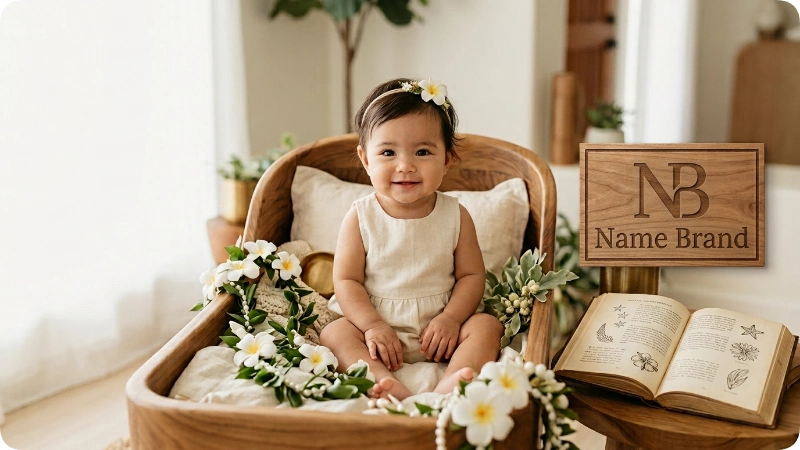
Leilani
Meaning: Heavenly lei; royal child
Pronunciation: lay LAH nee
Origin: Hawaiian
Gender: Girl in modern given name usage
Leilani combines lei, a garland or wreath, with lani, meaning sky, heaven, or something exalted. It is one of the best known Hawaiian girl names and illustrates how Hawaiian names can combine short words into a larger descriptive expression.
Kailani
Meaning: Sea and sky
Pronunciation: kye LAH nee
Origin: Hawaiian
Gender: Girl in modern usage
Kailani combines kai, “sea,” with lani, “sky” or “heaven.” Both components are established Hawaiian words.
Mahina
Meaning: Moon, moonlight
Pronunciation: mah HEE nah
Origin: Hawaiian
Gender: Girl
Mahina is the Hawaiian word for the moon and can also refer to a lunar month or moonlight. As a given name, it draws directly from established Hawaiian vocabulary rather than being a modern English invention.
Anuhea
Meaning: Cool, soft fragrance, like a mountain breeze
Pronunciation: ah noo HEH ah
Origin: Hawaiian
Gender: Mainly girl in modern usage
Anuhea is formed from anu, “cool,” and hea, a word associated with fragrance in the name’s documented interpretation. The name is especially associated with nature and a cool mountain breeze.
Lokelani
Meaning: Heavenly rose; the pink rose of Maui
Pronunciation: loh keh LAH nee
Origin: Hawaiian
Gender: Mainly girl in modern usage
Lokelani combines loke, “rose,” with lani, “heaven” or “sky.” The rose element itself entered Hawaiian vocabulary after roses reached the islands, so the name is Hawaiian in its linguistic formation while incorporating a historically borrowed plant word.
Nohealani
Meaning: Heavenly loveliness
Pronunciation: noh heh ah LAH nee
Origin: Hawaiian
Gender: Girl
Nohealani combines nohea, “lovely” or “handsome,” with lani, “heaven” or “sky.” It is a good example of how Hawaiian name elements can be combined into longer descriptive names.
Hōkūlani
Meaning: Heavenly star
Pronunciation: HOH koo LAH nee
Origin: Hawaiian
Gender: Girl
Hōkūlani combines hōkū, “star,” with lani, “heaven” or “sky.” The kahakō in Hōkū is part of Hawaiian orthography and should not simply be removed when accurate Hawaiian spelling is intended.
Pualani
Meaning: Heavenly flower; royal offspring
Pronunciation: poo ah LAH nee
Origin: Hawaiian
Gender: Girl
Pualani combines pua, “flower, blossom; offspring,” with lani. The result is a name that can carry both floral and elevated/heavenly associations.
Maile
Meaning: The maile vine
Pronunciation: MY leh
Origin: Hawaiian
Gender: Girl
Maile refers to the fragrant maile vine, traditionally associated with lei. It is therefore a botanical name with a direct connection to Hawaiian plant vocabulary.
Melia
Meaning: Plumeria
Pronunciation: meh LEE ah
Origin: Hawaiian usage
Gender: Girl
Melia is used as a Hawaiian plant name for plumeria. It belongs to the botanical side of Hawaiian naming, where plants and flowers provide direct sources for given names.
Nani
Meaning: Beauty; beautiful
Pronunciation: NAH nee
Origin: Hawaiian
Gender: Girl
Nani is a Hawaiian word associated with beauty and is used in feminine given names. It also appears as a building block in compound names.
Momi
Meaning: Pearl
Pronunciation: MOH mee
Origin: Hawaiian
Gender: Girl
Momi means “pearl” in Hawaiian and belongs to a group of names based on natural objects and imagery.
Kaleʻa
Meaning: Joy, happiness, brightness
Pronunciation: kah LEH ah
Origin: Hawaiian
Gender: Girl in modern usage
Kaleʻa is built from Hawaiian elements and is documented as a feminine given name. Its meaning is associated with joy, happiness, and brightness.
Hawaiian Boy Names With Meanings

Hawaiian boy names often draw from qualities, nature, ancestry, and the physical landscape. Several also overlap with broader unisex naming traditions.
Koa
Meaning: Brave, bold, fearless; koa tree
Pronunciation: KOH ah
Origin: Hawaiian
Gender: Traditionally flexible, though modern usage often favors boys
The Hawaiian word koa has several established meanings. The Hawaiian Dictionary gives “brave, bold, fearless” as one sense and also uses koa for the native koa tree, Acacia koa. This makes it important not to reduce the name to only “warrior.”
Ikaika
Meaning: Strong, powerful
Pronunciation: ee KYE kah
Origin: Hawaiian
Gender: Boy in modern usage
Ikaika is associated with strength and power and is documented as a Hawaiian masculine given name.
Makoa
Meaning: Fearless, courageous, bold
Pronunciation: mah KOH ah
Origin: Hawaiian
Gender: Boy in modern usage
Makoa is built around the Hawaiian idea of koa, which includes bravery and fearlessness. It is used as a masculine Hawaiian name.
Hawaiian Names That Start With K
Here are some Hawaiian baby names that start with K, along with their meanings:
- Kai: Sea.
- Kailani: Sea and sky.
- Kalani: The heavens or the sky.
- Kalea: Joy or happiness.
- Kaleo: Sound or voice.
- Kanani: Beauty or glory.
- Kealoha: Love or the beloved.
- Keanu: The cool breeze.
Hawaiian Unisex Baby Names

Hawaiian names require particular care when it comes to gender. Some names are currently marketed primarily for girls or boys, while others have a documented history of flexible use. The safest approach is to state the observed usage rather than impose an English gender category.
Kai
Meaning: Sea, seawater
Pronunciation: KYE
Gender: Unisex
Kai is a straightforward Hawaiian word meaning sea or seawater. It is also widely used as a given name and is one of the clearest examples of a Hawaiian name whose meaning comes directly from ordinary language.
Lani
Meaning: Sky, heaven; royal, exalted
Pronunciation: LAH nee
Gender: Unisex
Lani can mean sky or heaven and can also carry meanings connected with high rank, nobility, or exaltation. It appears both independently and as an element in many compound names.
Kalani
Meaning: The heavens; the royal one
Pronunciation: kah LAH nee
Gender: Unisex
Kalani combines ka and lani and is used for more than one gender. Its meaning should not be reduced to a single English gloss because lani itself has several related senses.
Nohea
Meaning: Lovely, handsome, of fine appearance
Pronunciation: noh HEH ah
Gender: Unisex
Nohea is particularly useful for parents who want a genuinely gender flexible Hawaiian name. Hawaiian Name Finder identifies it as a documented unisex name, while the underlying Hawaiian word refers to beauty or fine appearance.
Aloha
Meaning: Love, affection; greeting or farewell
Pronunciation: ah LOH hah
Gender: Unisex usage
Aloha is much more than the simplified English gloss “hello.” Hawaiian dictionaries record meanings including affection, love, sympathy, greeting, farewell, and related expressions. Because it is such a central Hawaiian cultural word, using it as a personal name carries more cultural weight than choosing an ordinary nature word.
Makana
Meaning: Gift, present, reward, donation, prize
Pronunciation: mah KAH nah
Gender: Unisex
Makana is an established Hawaiian word meaning gift or present and is also used as a given name. The dictionary meaning is broader than the single English word “gift.”
Makani
Meaning: Wind, breeze
Pronunciation: mah KAH nee
Gender: Unisex
Makani comes directly from Hawaiian vocabulary for wind or breeze and is used as a personal name.
Moana
Meaning: Ocean, open sea
Pronunciation: moh AH nah
Gender: Unisex
Moana is a Hawaiian word meaning ocean or open sea. It is not exclusively Hawaiian in a broader Polynesian linguistic context, so calling it uniquely Hawaiian without qualification would be too narrow. For a Hawaiian focused article, it is best described as a Hawaiian language name with wider Polynesian cognates and usage.
Kealoha
Meaning: The beloved; the loved one
Pronunciation: keh ah LOH hah
Gender: Unisex
Kealoha combines ke with aloha. The second element carries meanings of love, affection, sympathy, and greeting, while the compound is used as a Hawaiian personal name.
Keola
Meaning: The life
Pronunciation: keh OH lah
Gender: Unisex
Keola combines ke with ola, “life.” It is a documented Hawaiian name used for more than one gender.
Nalu
Meaning: Wave, surf
Pronunciation: NAH loo
Gender: Unisex
Nalu is a Hawaiian ocean word referring to waves or surf. It is a natural fit for families seeking a name directly connected with the sea.
Ānuenue
Meaning: Rainbow
Pronunciation: ah noo eh NOO eh
Gender: Unisex
Ānuenue is the Hawaiian word for rainbow and is also documented as a unisex given name. The kahakō in Ā should be retained when using the standardized Hawaiian spelling.
Hawaiian Names Inspired by Nature
Nature is not just a convenient theme for modern Hawaiian baby name lists. Hawaiian language vocabulary provides a large number of established words connected to the ocean, weather, plants, sky, animals, and landscape. Current Hawaiian name references group names around these meanings, including ocean, wind, plants, mountains, rain, stars, and flowers.
Some useful choices include:
| Name | Meaning | Nature Connection |
|---|---|---|
| Kai | Sea | Ocean |
| Kailani | Sea and sky | Ocean + sky |
| Moana | Ocean, open sea | Ocean |
| Nalu | Wave, surf | Ocean |
| Makani | Wind, breeze | Weather |
| Mahina | Moon, moonlight | Moon |
| Hōkūlani | Heavenly star | Stars + sky |
| Ānuenue | Rainbow | Weather |
| Maile | Maile vine | Plant |
| Melia | Plumeria | Flower |
| Lokelani | Heavenly rose | Flower |
| Pualani | Heavenly flower | Flower |
| Momi | Pearl | Natural object |
| Pōhaku | Rock, stone | Landscape |
This is one place where meaning accuracy matters. For example, kai means sea, while lani has meanings including sky and heaven. A compound name should therefore be explained through its components rather than given an invented poetic interpretation.
Hawaiian Names With Christian and Biblical Connections

Hawaiian naming history also includes names adapted from Christianity. These names deserve their own category because their religious origin and Hawaiian form are different facts.
Malia
Meaning / origin: Hawaiian form of Mary
Pronunciation: mah LEE ah
Gender: Girl
Religious connection: Christian/biblical tradition through Mary
Malia is not originally a Hawaiian word meaning “calm and gentle.” It is a recorded Hawaiian form of Mary, created through the phonological patterns of the Hawaiian language. Historical Hawaiian writing adapted foreign names to an alphabet with fewer consonants, producing forms such as Malia.
This makes Malia a useful example of the difference between a Hawaiian name and a name of indigenous Hawaiian lexical origin.
Elikapeka
Meaning / origin: Hawaiian form of Elizabeth
Pronunciation: eh lee kah PEH kah
Gender: Girl
Religious connection: Biblical/Christian through Elizabeth
Elikapeka is the Hawaiian form of Elizabeth. It is therefore Hawaiian in its established linguistic form and usage, but its underlying personal name origin is not indigenous Hawaiian. The name Elizabeth comes from the biblical tradition.
Apikalia
Meaning / origin: Hawaiian form of Abigail
Pronunciation: ah pee kah LEE ah
Gender: Girl
Religious connection: Biblical/Christian through Abigail
Apikalia is a Hawaiian form of Abigail. Like Elikapeka, it should not be described as an originally Hawaiian personal name; it is a Hawaiian adaptation of a name introduced through Christian and English language naming.
These names demonstrate why Hawaiian usage does not automatically mean Hawaiian etymological origin. The distinction is particularly important for a cultural naming guide.
Understanding Hawaiian Spelling: ʻOkina and Kahakō

Hawaiian spelling has two important diacritical marks: the ʻokina and kahakō.
The ʻokina (ʻ) represents a glottal stop. The kahakō, a macron over a vowel such as ā, ē, ī, ō, or ū, indicates a lengthened vowel. The University of Hawaiʻi explains that both marks affect pronunciation, and in some cases omitting them can change a word’s meaning.
The State of Hawaiʻi also has legislation addressing the consistent use and spelling of Hawaiian names and words with kahakō and ʻokina in state and county materials.
For parents and publishers, this means:
- Hawaiʻi is more precise than writing only Hawaii when Hawaiian orthography is intended.
- Hōkūlani should retain its kahakō.
- Kaʻiulani uses an ʻokina.
- Ānuenue uses a kahakō.
- An ordinary apostrophe should not automatically replace an ʻokina.
- If a name has a documented traditional spelling, preserve the appropriate diacritics where technically possible.
The University of Hawaiʻi specifically recommends proper Hawaiian diacritical marks in Hawaiian language text.
How to Choose a Hawaiian Baby Name Respectfully

A Hawaiian name can be chosen for many legitimate reasons, but the process benefits from more than copying a translation from a baby name list.
Start With the Actual Hawaiian Word
If you like a name because it means “sea,” “sky,” “love,” or “gift,” check the Hawaiian word itself. For example, kai means sea, lani means sky/heaven, aloha includes love and affection among its meanings, and makana means gift.
Check if the Name Is Traditional or a Modern Combination
Not every attractive combination of Hawaiian words has the same historical status. Hawaiian Name Finder explicitly distinguishes documented given names from modern combinations and flags uncertain meanings.
That distinction is useful because a name can be linguistically possible without necessarily being an established traditional personal name.
Learn the Pronunciation
Hawaiian pronunciation is relatively regular. Every vowel is pronounced, and the ʻokina and kahakō can affect how a name is spoken. Learning the correct pronunciation is part of treating the language as a living language rather than simply using an English approximation.
Consider Cultural Context
Some words have much greater cultural significance than their simple English translation suggests. Aloha, for example, carries meanings related to love, affection, sympathy, greetings, and farewell. It is not merely a decorative synonym for “hello.”
If a name is being chosen outside a Hawaiian family or community, learning its actual meaning, pronunciation, and history is a better approach than selecting it solely because it sounds alluring.
Hawaiian Baby Names by Meaning

For parents who already know the meaning they want, these groupings can make a shortlist easier:
Ocean and water: Kai, Kailani, Moana, Nalu
Sky and heaven: Lani, Kalani, Leilani, Hōkūlani, Pualani
Flowers and plants: Maile, Melia, Lokelani, Pua
Beauty: Nani, Nohea, Nohealani
Love and affection: Aloha, Kealoha
Gifts and precious things: Makana, Momi
Strength: Koa, Ikaika, Makoa
Weather and natural phenomena: Makani, Ānuenue, Mahina
Calm and peace: Mālie
These categories describe the literal or established lexical meanings rather than assigning personality traits to children.
FAQs
Traditional Hawaiian Names and Their Meanings
What are traditional Hawaiian baby names?
Traditional Hawaiian names are grounded in the Hawaiian language and naming traditions rather than simply being marketed as “Hawaiian inspired.” Examples include Kai, Lani, Mahina, Koa, Makana, Makani, and Aloha, although individual names have different histories and gender usage.
What is a beautiful Hawaiian girl name?
“Beautiful” is subjective, so there is no single factual best choice. If you want a Hawaiian girl name whose meaning relates to beauty, Nani means beauty or beautiful, while Nohea means lovely or handsome and is unisex.
What Hawaiian names mean ocean or sea?
Kai means sea or seawater, while Moana means ocean or open sea. Kailani combines kai with lani, giving the established meaning “sea and sky.”
Is Leilani a Hawaiian name?
Yes. Leilani is a documented Hawaiian name built from lei and lani. It is commonly interpreted as “heavenly lei,” with lani carrying meanings that include sky, heaven, and exalted or royal.
What Does Kanani Mean in Hawaiian?
Kanani is a Hawaiian name associated with beauty and glory. It is commonly used as a girl’s name.
Gender, Usage, and Hawaiian Spelling
Are Hawaiian baby names unisex?
Some are. Kai, Lani, Kalani, Nohea, Aloha, Makana, Makani, Moana, Kealoha, and Keola are examples of names documented with flexible or unisex usage. Modern naming patterns can lean toward one gender, however, so “unisex” should not be treated as a universal rule for every Hawaiian community.
Can Hawaiian Words Be Used as Baby Names?
Yes. Many Hawaiian baby names come from words associated with nature, feelings, and the natural world. For example, Kai means “sea,” Lani means “sky” or “heaven,” and Pua means “flower” or “blossom.” A Hawaiian dictionary can help parents check a word’s meaning and spelling before choosing it as a name.
What does the ʻokina mean in Hawaiian names?
The ʻokina represents a glottal stop, a brief break in pronunciation. It is a genuine part of Hawaiian orthography, not a decorative apostrophe. The University of Hawaiʻi notes that it can affect pronunciation and, in some words, meaning.
Origins, Religion, and Cultural Context
Is Malia originally a Hawaiian name?
Malia is an established Hawaiian form, but it is borrowed rather than indigenous in lexical origin. It is the Hawaiian form of Mary, documented in Hawaiian language records from the 1800s onward.
What Does Leialoha Mean in Hawaiian?
Leialoha is a Hawaiian name formed from lei and aloha. Lei means “garland” or “wreath,” while aloha carries meanings such as “love” and “affection.” The name is commonly interpreted as “beloved child” or “lei of love.” It has historical use as a Hawaiian personal name and can be given to girls or, less commonly, boys.
What Is the Hawaiian Name for Laura?
Laura is sometimes represented as Lala in Hawaiian name-adaptation lists. This is an adapted form of the name rather than an originally Hawaiian name with an independent Hawaiian meaning. Parents choosing a Hawaiian version of Laura should confirm the preferred spelling and pronunciation with a knowledgeable Hawaiian language speaker.
Are Hawaiian names religious?
Some have religious or spiritual associations, but Hawaiian names should not all be classified as religious. Indigenous Hawaiian naming traditions existed before Christianity, while later Hawaiian naming also incorporated Christian names such as Malia and Elikapeka. It is more accurate to distinguish Indigenous Hawaiian, culturally significant, nature based, and Christian adapted names rather than treating the entire naming tradition as belonging to one religion.
Final Thoughts
The most useful way to explore Hawaiian baby names is to look beyond the sound of a name and understand the Hawaiian words behind it.
Kai connects directly to the sea, Lani to sky and heaven, Mahina to the moon, Makani to wind, Makana to a gift, and Aloha to a broad group of meanings involving love, affection, greeting, and farewell.

Brian Cox is a names editor and naming researcher at NameBrande.com who believes choosing a name starts with understanding its meaning, sound, and character. He focuses on boy names, naming styles, origins, and practical name ideas, turning research into clear, useful guides.
Areas of Focus: Boy Names | Name Meanings | Name Origins | Naming Styles | Name Ideas | Naming Research