
Quick Answer:
Baby names that start with M include classic choices such as Michael, Matthew, and Mary, along with modern favorites like Mateo, Mia, Mila, and Morgan. These names come from diverse linguistic and cultural traditions, including Hebrew, Latin, Greek, Arabic, Spanish, and Slavic. Explore their meanings, origins, pronunciations, and gender usage to find an M name that suits your family.
Choosing a baby name is an exciting part of preparing for your child’s arrival, and baby names that start with M offer plenty of possibilities. From timeless classics like Michael, Matthew, and Mary to contemporary favorites such as Mateo, Mia, and Mila, these names span a wide range of styles, meanings, and cultural traditions.
If you are looking for a strong boy name, a beautiful girl name, a gender neutral option, or a distinctive international choice, exploring M names can help you discover the right fit. This guide brings together baby names with their meanings, origins, pronunciations, and naming traditions to make your search easier.
As you explore the lists, consider how each name sounds with your family surname, how it is spelled in its original language, and if its history reflects something meaningful to you. Since some names have multiple origins, checking the relevant cultural context can help you make a more informed choice.
Baby Names That Start With M: Meanings and Origins
The following table introduces a selection of M names for boys, girls, and children of any gender. The meanings reflect their relevant linguistic traditions rather than assuming that every name has one universal definition.
| Name | Gender usage | Meaning or etymology | Origin |
|---|---|---|---|
| Madison | Feminine; historically masculine | Originally a surname derived from a personal name meaning “son of Maud” | English |
| Mateo | Masculine | Spanish form of Matthew, ultimately from a Hebrew name meaning “gift of Yahweh” | Spanish, Hebrew |
| Matthew | Masculine | “Gift of Yahweh” | Hebrew |
| Maya | Feminine | Has multiple independent origins and meanings | Several traditions |
| Mia | Feminine | Used as a short form of Maria and as an independent given name | European traditions |
| Michael | Masculine | “Who is like God?” | Hebrew |
| Mila | Feminine | Associated with the Slavic element mil, meaning “dear” or “gracious” | Slavic |
| Milan | Primarily masculine; also feminine in some communities | Associated with the Slavic element mil, meaning “dear” or “gracious” | Slavic |
| Mina | Feminine; other usage exists | Used as an independent name and as a short form of longer names | Multiple traditions |
| Morgan | Gender neutral in contemporary English usage | Welsh derived name with historically debated interpretations | Welsh |
| Muhammad | Masculine | “Praised” or “commendable” | Arabic |
| Mira | Feminine | Has several origins, including Slavic associations with peace or the world |
Source attribution: Behind the Name, relevant entries for name forms, meanings, and linguistic origins. Multiple origin names require language specific interpretation.
Baby Boy Names That Start With M
M names for boys include established biblical names, European forms, Arabic names, and names derived from surnames. The following examples provide a range of origins and naming histories.
| Name | Meaning or etymology | Origin |
|---|---|---|
| Magnus | “Great” | Latin |
| Malcolm | Anglicized form of Scottish Gaelic Máel Coluim, traditionally interpreted as “devotee of Saint Columba” | Scottish Gaelic |
| Marcus | Traditionally associated with Mars, the Roman god of war; the exact derivation is uncertain | Latin |
| Mateo | Spanish form of Matthew | Spanish |
| Matthew | “Gift of Yahweh” | Hebrew |
| Matthias | Greek form related to Matthew, ultimately from Hebrew Mattityahu | Greek, Hebrew |
| Maverick | Originally an English surname, now used as a given name | English |
| Maximilian | Related to the Roman name Maximilianus and the Latin Maximus, “greatest” | Latin |
| Michael | “Who is like God?” | Hebrew |
| Miguel | Spanish and Portuguese form of Michael | Spanish, Portuguese |
| Milan | Associated with the Slavic element mil, “dear” or “gracious” | Slavic |
| Milo | Has several possible origins, including Germanic and Slavic explanations | Multiple traditions |
| Mitchell | English surname derived name related to Michael | English |
| Mohammed | Common English spelling of Muhammad | Arabic |
| Moses | Biblical name with a debated etymology; traditionally connected with the Hebrew verb meaning “to draw out” | Hebrew tradition |
| Muhammad | “Praised” or “commendable” | Arabic |
Names such as Mateo, Miguel, and Muhammad have distinct linguistic histories. A name’s popularity in one country should not be assumed to apply globally.
Baby Girl Names That Start With M
Many M names for girls are established forms of longer names, while others have independent histories. The following names have documented feminine usage.
| Name | Meaning or etymology | Origin or tradition |
|---|---|---|
| Madeleine | French form of Magdalene, meaning “of Magdala” | French |
| Madeline | English form related to Madeleine | English |
| Madison | Originally a surname derived from a personal name meaning “son of Maud” | English |
| Mae | Used as a given name and as a short form of May or Margaret | English |
| Margaret | From Greek margarites, meaning “pearl” | Greek |
| Margot | French form of Margaret | French |
| Maria | Latin form of the Greek name Maria, ultimately related to Hebrew Miriam; meaning is debatable | Latin, Hebrew |
| Mary | English form of Maria; the underlying meaning is uncertain | English |
| Matilda | From Germanic elements traditionally interpreted as “strength” and “battle” | Germanic |
| Maya | Has multiple origins, including distinct Sanskrit and European associations | Several traditions |
| Mia | Often used as a short form of Maria; also an independent given name | European usage |
| Mila | Associated with Slavic mil, meaning “dear” or “gracious” | Slavic |
| Mina | Used as a short form of several names and as an independent given name | Multiple traditions |
| Mira | Has several origins, including Slavic forms associated with peace or the world | Multiple traditions |
| Molly | Traditional English diminutive of Mary | English |
| Monica | Origin uncertain; the name has a long history of use in Latin and European traditions | Latin usage |
Names such as Maya, Mira, and Mina should not automatically be assigned one meaning. Their etymologies depend on the naming tradition being considered.
Gender Neutral Baby Names That Start With M

Gender neutral usage can vary by country, community, and generation. These names have documented use across genders in at least some naming contexts.
- Marley: An English surname derived given name used for more than one gender.
- Meredith: A Welsh name with historical masculine usage and contemporary feminine usage in English.
- Micah: A Hebrew name used primarily for boys in biblical and contemporary contexts, with some feminine usage in modern naming.:
- Misha: Used as a diminutive of Mikhail in Russian and as a given name for more than one gender in other communities.
- Morgan: A Welsh derived name used for more than one gender in contemporary English language naming.
Gender neutral usage does not mean that a name is equally common for every gender in every country. Parents should consider the naming conventions of the language and community relevant to their family.
Short Baby Names That Start With M
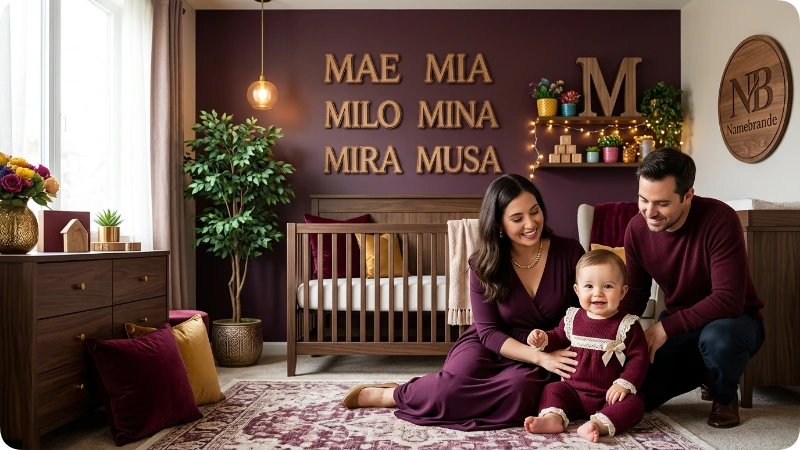
Short names can be appealing because they are compact and easy to incorporate into a full name. For this section, short means a displayed name with four letters or fewer.
- Mae: A three letter given name and short form associated with May and Margaret.
- Mia: A three letter name often used as a short form of Maria.
- Mia has established independent use as well as its use as a short form.
- Moe: A short form of several names, including Maurice and Moses, depending on the naming tradition.
- Milo: A four letter masculine name with multiple possible origins.
- Mina: A four letter feminine name used independently and as a short form.
- Mira: A four letter feminine name with several linguistic origins.
- Musa: A masculine name used in Arabic and other traditions; it is a form related to Moses.
A short spelling does not necessarily mean that a name has a simple origin. Check the source form and pronunciation if the name has multiple linguistic histories.
M Names With Meaningful Cultural Histories
Names can reflect a particular language, community, or family tradition. The examples below illustrate why a cultural connection should be described precisely.
| Name | Cultural or linguistic context | Meaning or background |
|---|---|---|
| Mateo | Spanish | Spanish form of Matthew |
| Matthias | Greek | Form related to Matthew, ultimately from Hebrew Mattityahu |
| Michael | Hebrew | “Who is like God?” |
| Miguel | Spanish and Portuguese | Form of Michael |
| Milan | Slavic | Associated with mil, “dear” or “gracious” |
| Mila | Slavic | Associated with mil, “dear” or “gracious” |
| Muhammad | Arabic | “Praised” or “commendable” |
| Musa | Arabic and other traditions | Form related to Moses; etymology is debated |
| Malachi | Hebrew | “My messenger” or “my angel,” depending on the interpretation |
| Miriam | Hebrew | Biblical name with uncertain etymology |
Source attribution: Behind the Name, relevant entries for the names and language forms. Religious and historical associations should be verified separately from etymology.
A name’s origin is not necessarily the same as the community where it is currently used. For example, a name may have a Hebrew origin and be used in English, Spanish, Arabic, or other naming traditions. Families choosing a culturally significant name should check the form and pronunciation used in that tradition.
M Names With Nature Related Meanings

Nature related meanings can be an appealing part of a name’s history. These examples have linguistic or word name connections to nature, although the exact meaning depends on the source.
- Marina: A feminine name derived from Latin marinus, meaning “of the sea.”
- Marisol: A Spanish feminine name commonly associated with a combination of María and Sol, though its interpretation can vary.
- Maya: Has multiple origins; a nature related meaning should not be assigned without identifying the relevant language.
- Meadow: An English word name referring to a grassy field.
- Myrtle: An English botanical name referring to the myrtle plant.
- Moss: An English word name and surname connected with the plant or a landscape feature.
- Mira: Has several origins; not every tradition associates it with nature.
A nature related interpretation should be supported by the original word or name form. Avoid relying on a short description that does not identify its language or source.
International Baby Names That Start With M
M names appear across many languages. A shared initial does not mean that these names have the same origin or meaning.
| Name | Language or tradition | Documented background |
|---|---|---|
| Mateo | Spanish | Form of Matthew |
| Matías | Spanish | Form related to Matthias and Matthew |
| Matteo | Italian | Italian form of Matthew |
| Matthias | Greek | Form related to Matthew |
| Maya | Multiple traditions | Different origins and meanings across languages |
| Mila | Slavic | Associated with mil, “dear” or “gracious” |
| Milan | Slavic | Associated with mil, “dear” or “gracious” |
| Miguel | Spanish, Portuguese | Form of Michael |
| Mohammed | Arabic | English spelling of Muhammad |
| Musa | Arabic and other traditions | Form related to Moses |
| Mikhail | Russian and other Slavic contexts | Form of Michael |
| Minato | Japanese | Meaning depends on the kanji used |
| Mei | Japanese and Chinese usage | Meaning depends on the characters and language |
| Makoto | Japanese | Meaning depends on the characters used |
Source attribution: Behind the Name, relevant language form entries. Japanese names require the intended written characters for a precise meaning.
For names written in languages that use different scripts, romanization can hide important distinctions. Japanese names, in particular, may have different meanings depending on the characters selected. Verify the intended written form with a reliable language specific reference.
M Names With Different Spellings and Language Forms

Spelling differences can indicate a regional form, an Anglicized version, or a genuinely different name. These distinctions can help families preserve a particular cultural connection.
- Mateo, Matteo, and Matías: Mateo is Spanish, Matteo is Italian, and Matías is a Spanish form related to Matthias. They are related through the Matthew name family, but their spellings follow different language conventions.
- Michael, Miguel, and Mikhail: These are forms related to the same Hebrew name, used in different linguistic traditions.
- Muhammad and Mohammed: Both are common English spellings of the Arabic name محمد. Transliteration conventions influence the displayed spelling.
- Madeleine and Madeline: These are related forms of Magdalene, with different spelling conventions.
- Mia and Maria: Mia is often used as a short form of Maria, though Mia also has independent use.
- Mila and Milan: These names are related to the Slavic element mil, but they are distinct given names.
A spelling variation should not automatically be treated as an identical name in every cultural context. Check the source form and pronunciation before deciding which version to use.
How to Pronounce Less Familiar M Names

Pronunciation can change between languages and regions. An English approximation may not represent every bearer’s pronunciation.
- Mateo: Commonly pronounced mah TEH oh in Spanish.
- Matteo: Commonly pronounced mah TTEH oh in Italian, with a different consonant pattern from the English reading.
- Mikhail: Pronunciation varies by language and transliteration; Russian usage differs from some English readings.
- Miriam: Commonly pronounced MEER ee um in English, with variations in Hebrew and other languages.
- Musa: Pronunciation differs across Arabic and other languages in which the name is used.
- Minato: A Japanese name whose pronunciation should be confirmed with the intended written form.
- Makoto: A Japanese name whose pronunciation and meaning should be checked against the characters used.
If pronunciation matters to your family, consult a reliable pronunciation reference or a speaker familiar with the name’s language. This is particularly important when choosing a name to honor a relative or cultural tradition.
Choosing a Baby Name That Starts With M

After finding names you like, compare the details that will matter in everyday use.
Start with the meaning you intend. A name such as Maya or Mira can have different meanings across linguistic traditions. Identify the origin you are considering before settling on a definition.
Say the full name aloud. Try the first, middle, and family names together. This can help you notice difficult transitions, repeated sounds, or an unexpectedly long combination.
Check spelling and pronunciation. If a name has multiple established forms, consider which one reflects your intended language and if you are comfortable explaining its pronunciation.
Consider family and cultural connections. A name may honor a relative, language, or community. Verify the form rather than relying only on an unsourced meaning.
Check local naming conventions. If you live in a multilingual community, consider how the name may be read and pronounced in the languages your child is likely to encounter.
The goal is not to find a name that meets a universal standard. It is to choose a documented form whose meaning, sound, and background make sense for your family.
Common Mistakes to Avoid When Choosing an M Name
A meaningful name deserves more than a quick search result. Avoid these common mistakes when comparing M names.
- Treating every meaning as universal: Maya, Mira, Mina, and other names can have unrelated histories across languages.
- Confusing a variant with an original form: Mateo and Matteo are related forms, but their spellings follow different language conventions.
- Assuming a name is popular without data: A name appearing on several baby name websites does not prove it ranks highly in your country.
- Using uncertain meanings as facts: If a name has competing etymologies, check a specialist source and acknowledge the uncertainty.
- Ignoring gender usage: A name may be unisex in one community and primarily masculine or feminine in another.
- Inventing a cultural connection: Do not assign a name to a religion, country, or language solely because it sounds familiar.
- Choosing a spelling without checking pronunciation: A spelling that looks straightforward in English may be read differently in its source language.
Checking these details can help you choose a name for the reasons that actually matter to you, rather than relying on a simplified or misleading description.
FAQs
What are some baby names that start with M?
Examples include Michael, Mateo, Matthew, Maya, Mia, Mila, Milan, Morgan, Muhammad, and Mira. These names represent different languages and gender usages, so compare their individual origins rather than assuming they share a common meaning.
What does the name Maya mean?
Maya has multiple origins. It appears in Sanskrit, Greek related European naming traditions, and other contexts, with different meanings and associations. The intended linguistic tradition should be identified before assigning a meaning.
Is Milan a boy’s name or a girl’s name?
Milan is primarily masculine in several Slavic naming traditions. It is also used for girls in some communities. Gender usage depends on the region and naming tradition.
Is Mia a full name or a nickname?
Mia is both an established independent given name and a short form of Maria and other names in some traditions.
Which M names have Hebrew origins?
Examples include Michael, Matthew, Miriam, Malachi, and Micah. Their meanings and historical forms differ, so each name should be checked individually.
Are there gender neutral names that start with M?
Yes. Morgan, Marley, Meredith, Misha, and Milan have documented use across genders in some communities. The extent of that usage differs by region and period.
Do all M names have one clear meaning?
No. Some names have well supported linguistic meanings, while others have multiple possible origins or uncertain etymologies. The spelling alone is not enough to establish a name’s meaning.
Final Thoughts
Baby names that start with M offer a broad range of choices, from established names such as Michael and Matthew to internationally used forms such as Mateo, Mila, and Muhammad. Their histories show that the same initial can bring together very different linguistic traditions.
As you narrow your list, choose a few names whose meanings and cultural backgrounds you can verify. Say each one aloud with the family surname, check the spelling used in the intended tradition, and confirm any pronunciation that is unfamiliar.

I am Ethan Mitchell, a passionate Name Researcher and Content Writer at namebrande.com. I share well-researched content about name meanings, origins, trends, and naming inspiration, helping readers discover unique and meaningful names from cultures around the world. Through namebrande.com, I aim to make the process of finding the perfect name informative, enjoyable, and inspiring.